
A Q&A with Mr. Zulfikar, Executive Engineer, Lakshmipur Municipality — on the journey to deploy IMIS and what it means for the future of urban WASH governance.

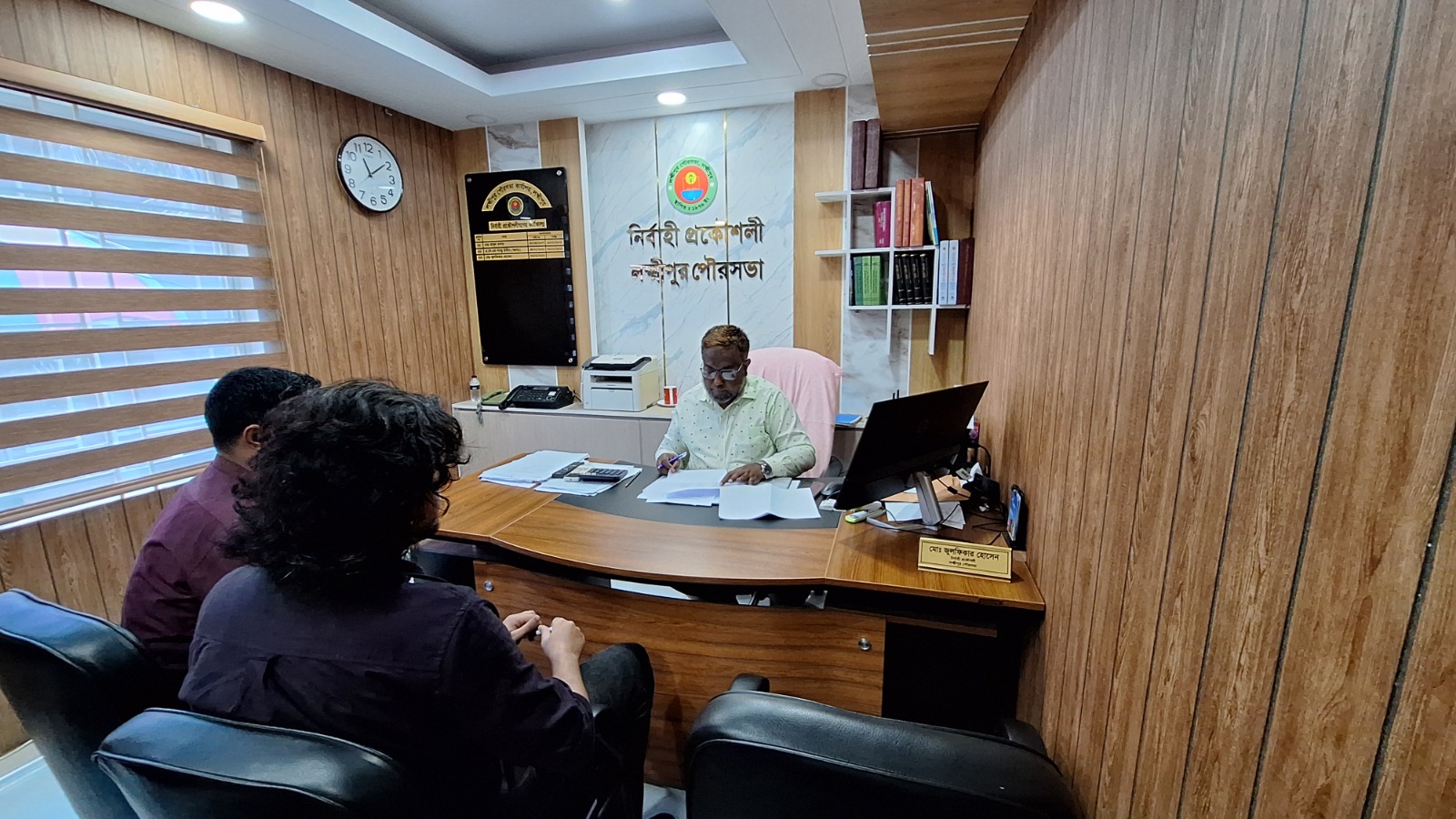
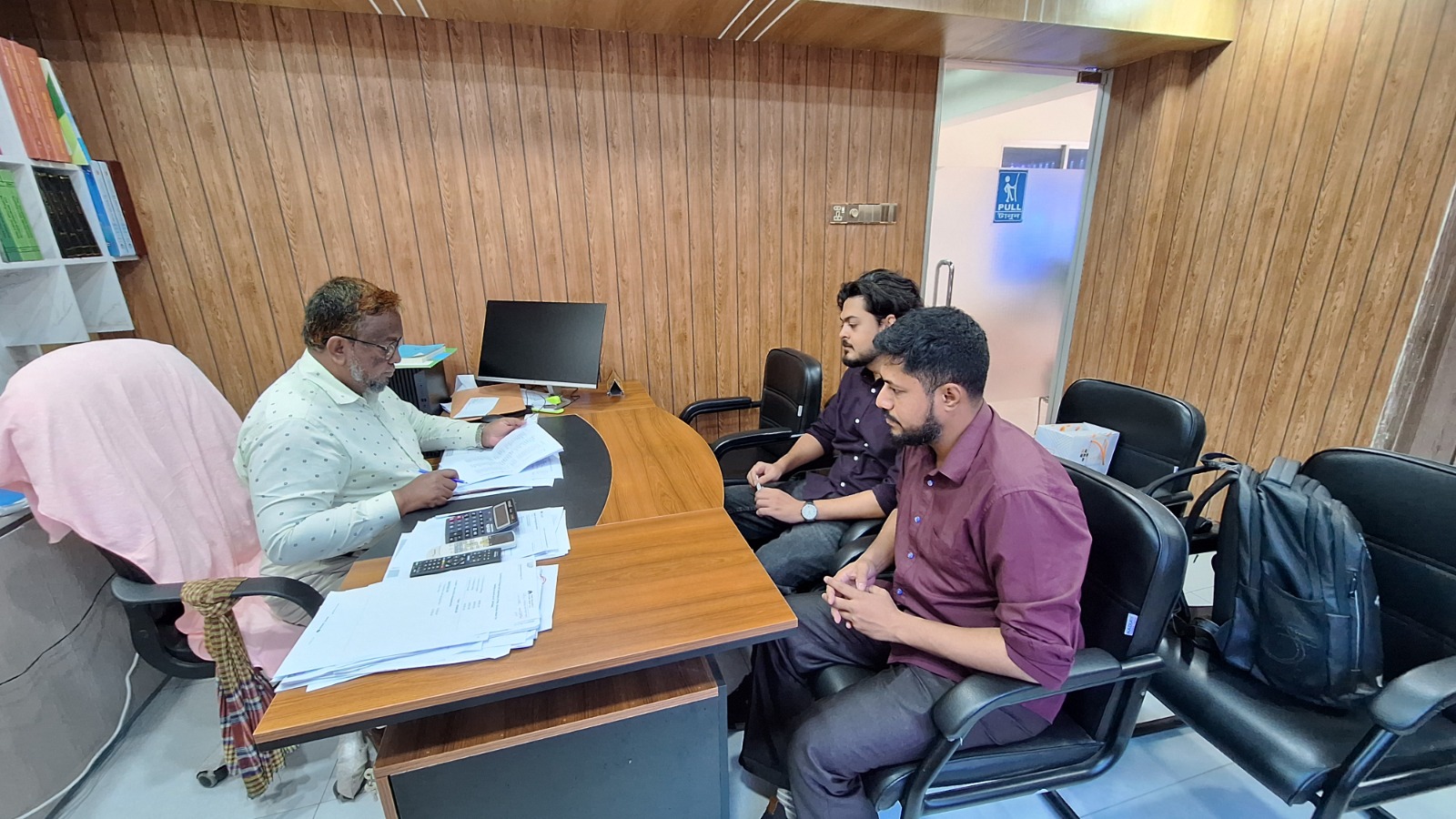
When Mohammad Zulfiqur Hossain joined Lakshmipur Pourashava as Executive Engineer in 2022, the city’s entire sanitation system lived in filing cabinets — holding records on paper, route logs written by hand, service decisions made on instinct. Less than four years later, more than 25,000 holdings in the city are mapped, tagged, and searchable. Lakshmipur, a city of 130,000 people, is now operating a fully functional GIS-based Integrated Municipal Information System (IMIS) and has emerged as a leading example of municipal digital transformation in Bangladesh, attracting learning visits from other cities.
The problem that paper kept making worse
Three decades in municipal engineering gave Zulfiqur Hossain a clear view of what wasn’t working. The problems were always moving faster than the records.
“Three decades ago, municipal management mainly depended on immediate problem-solving and paper-based documentation,” he says. “With rapid urbanization and population growth, the challenges have become far more complex. Today, simply delivering services is not enough — ensuring proper resource utilization and transparency has become a major challenge.”
The shift in his thinking, he explains, was less about the technology than about what it made visible. “When I realized that the entire sanitation status or holding information of a city could appear before our eyes with just a click, I understood that sustainable urban development is impossible without digital transformation.”
That conviction is what pushed the transition forward and what made the harder parts survivable.
“The biggest challenge was not technology itself — it was people’s mindset.”
— Mohammad Zulfiqur Hossain, Executive Engineer, Lakshmipur Pourashava
The harder work of changing habits
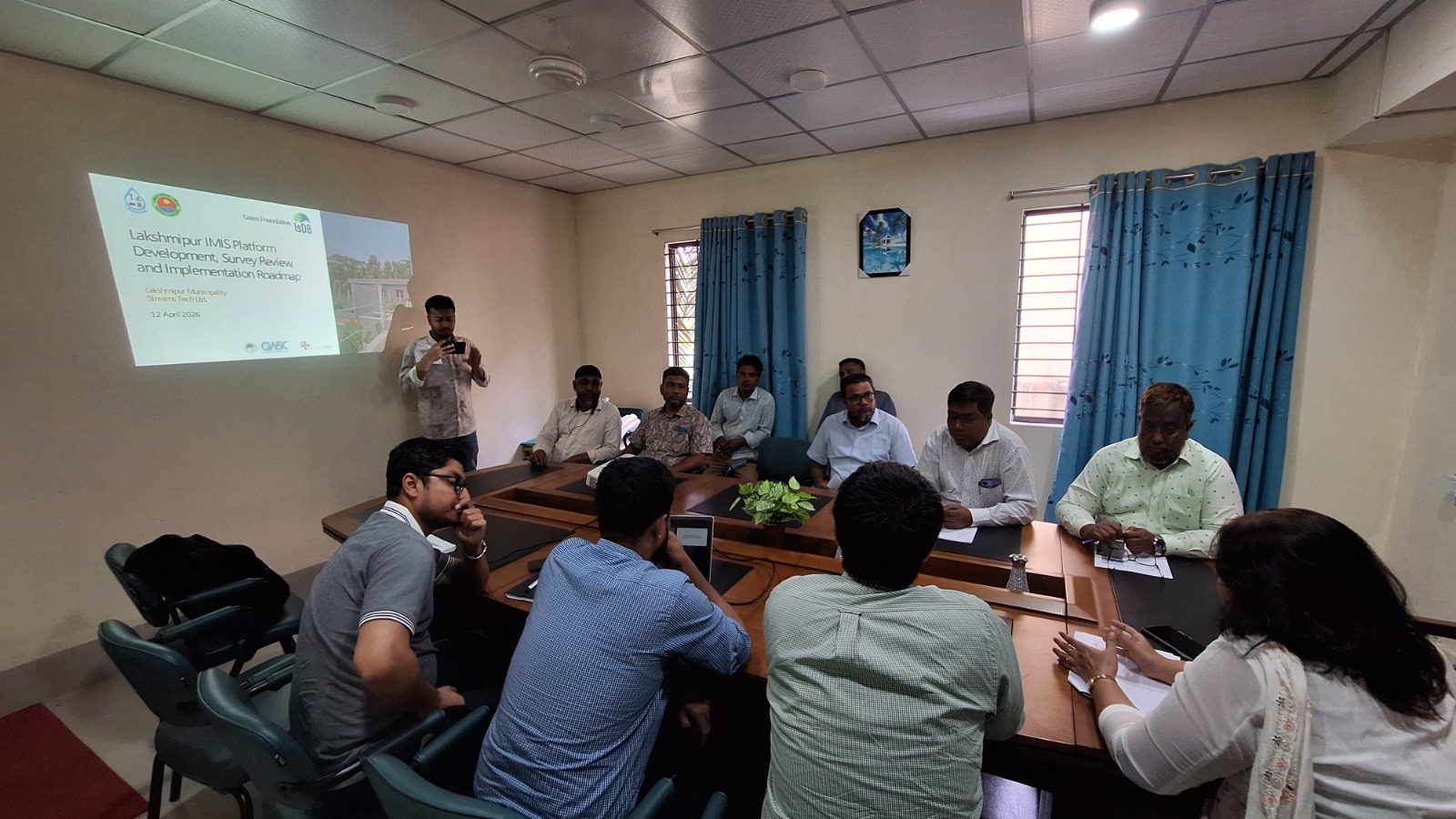
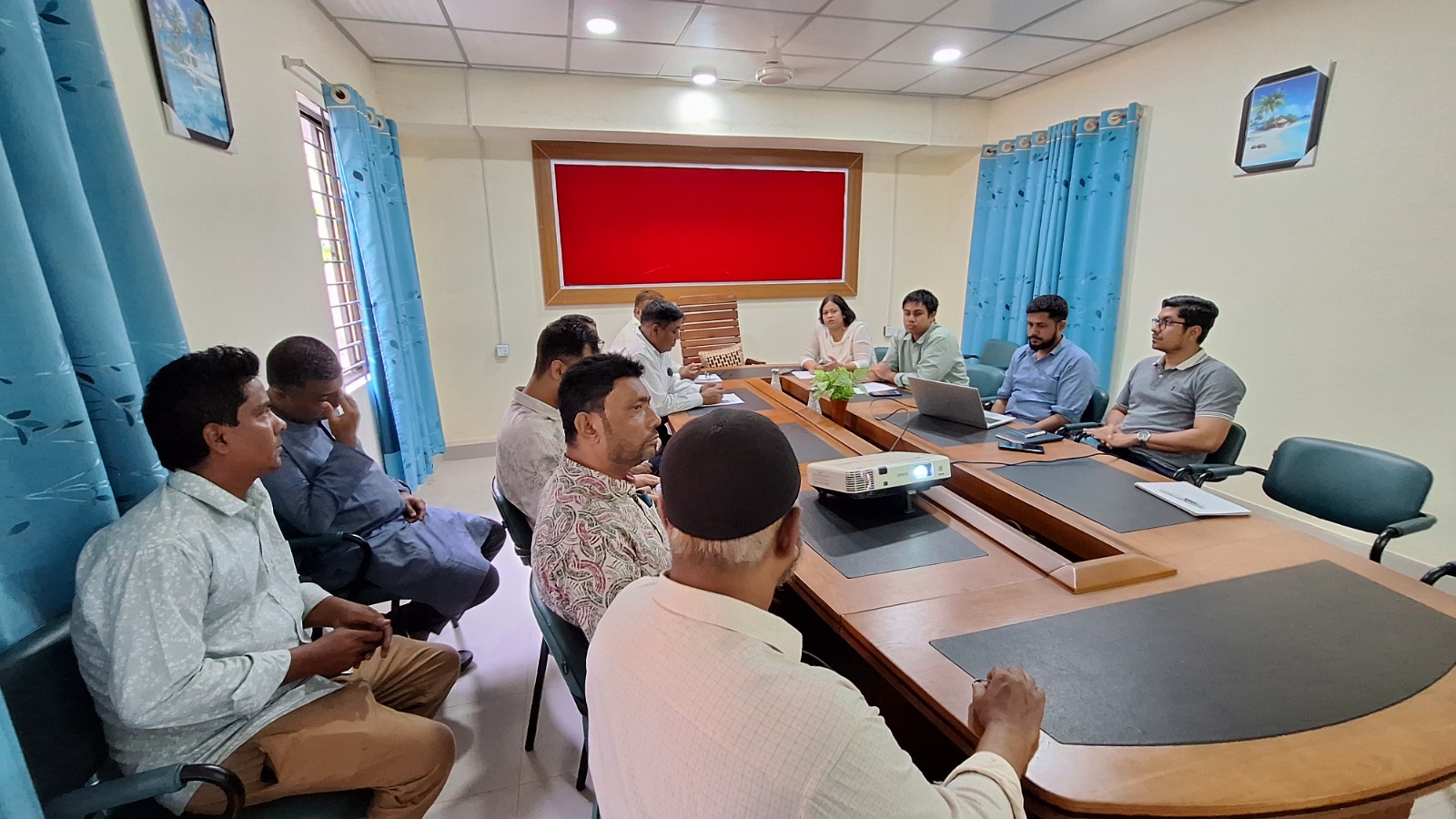
Converting years of paper records into a GIS-mapped digital system was, as Zulfiqur Hossain puts it plainly, “a massive undertaking.” But the technical work turned out to be the more tractable half. Staff who had spent years on manual systems had to be convinced not just to use new tools, but to trust them. Success ultimately hinged on systematic capacity development: using hands-on peer-to-peer mentoring to integrate the field teams’ invaluable local expertise directly into the new digital interface.
“Convincing them to adapt to a new digital system and helping them understand its importance was quite difficult.”
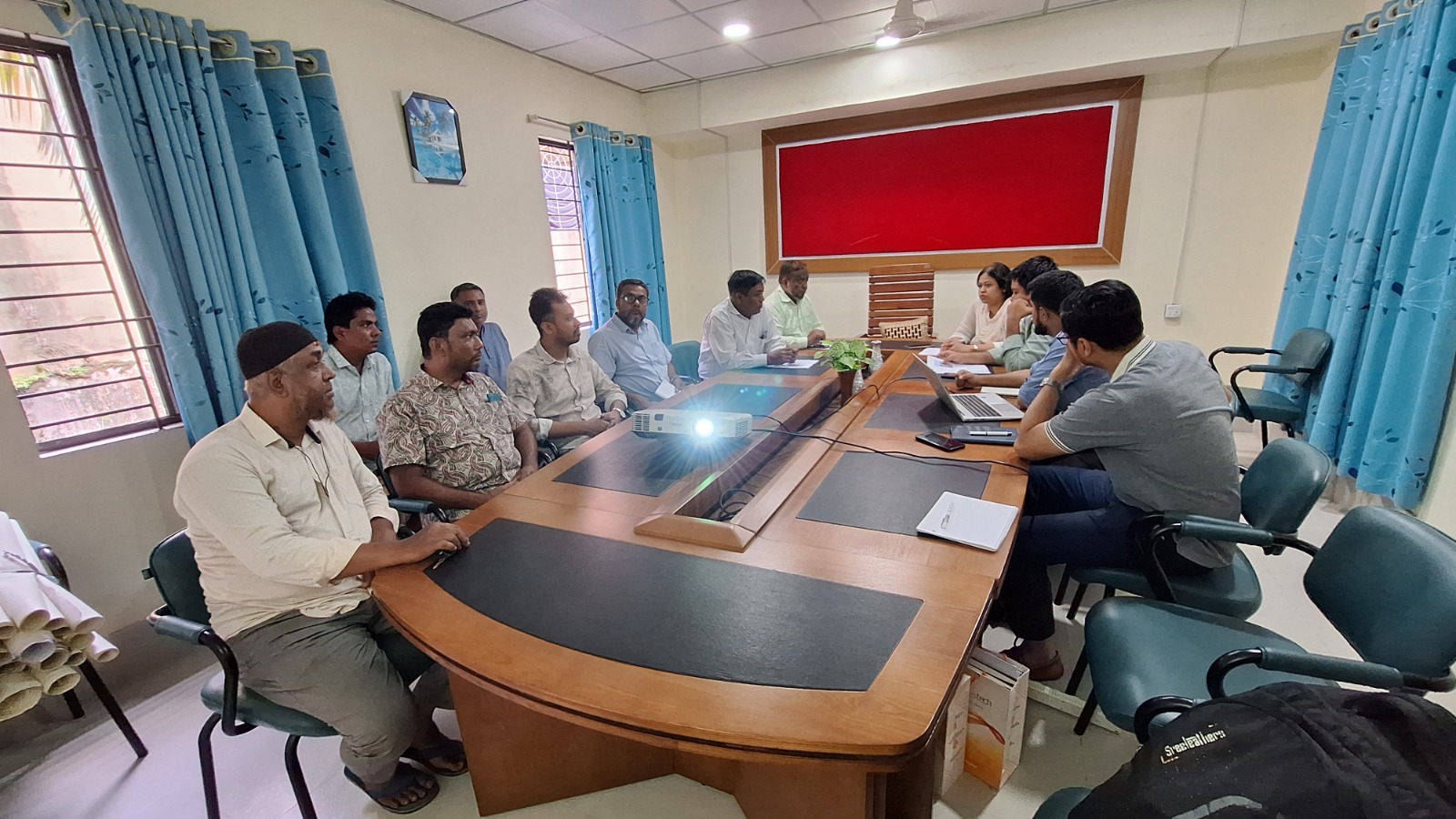
GWSC and the Inclusive and Integrated sanitation & Hygiene Project in 10 priority Towns in Bangladesh (LLF 10-Town Project) of DPHE’s Project Management Unit (PMU) stayed through the entire phase. Their teams ran training sessions on-site, worked alongside staff during field data collection, and fixed problems as they came up rather than waiting for formal review cycles.
“Without the technical and institutional support of GWSC and the LLF 10-Town Project PMU, this transformation could not have happened so quickly and successfully,” Zulfiqur Hossain says. “Their mentorship significantly boosted our confidence.”
This is what Citywide Inclusive Sanitation (CWIS) technical assistance looks like when it’s working: not a handover but a process. Local ownership built up while the external support is still there to catch the gaps.
What the GIS map shows that no one knew before
With IMIS live, Zulfiqur Hossain’s first use of it is specific. He wants to find the service gaps the old system couldn’t see.
“The first data-driven decision will be identifying the sanitation service gap hotspots in the city and prioritizing services in those areas. Through IMIS GIS mapping, we can now clearly see which holdings urgently require septic tank emptying and where faecal sludge management conditions are inadequate.”
In addition to the GIS mapping, the IMIS is now further adding features to track service payments, optimize emptying fee collection, and online payment gateways for city dwellers. These planned activities are targeted toward increased efficiency and lower long-term fecal sludge management (FSM) operational costs.
Key finding: For the first time, vacuum tanker deployment in Lakshmipur will go where the data points, not where someone assumed it was needed.
The ambition goes further. Zulfiqur Hossain describes plans to use GIS data for holding tax assessment, to map areas with higher rates of waterborne disease so the health department can act earlier, and to connect the system to building approvals and commercial licensing. Longer term, he wants every municipal service — street lighting, drainage, waste collection routes, citizen complaints — on a single live dashboard.
What Mentor City status actually requires
The official designation of Lakshmipur as a Mentor City elevates it to a regional learning hub. The municipality is now uniquely positioned to actively catalyze digital governance across peer cities by demonstrating live, field-tested implementations. Representatives from other Bangladeshi cities will come to Lakshmipur not to read about IMIS, but to watch it run.
Zulfiqur Hossain doesn’t talk about this in abstract terms. He names the things that could still go wrong — server downtime, data going stale as new buildings go up, maintenance budgets that don’t get renewed. His proposed fixes are structural: a permanent IT officer in the municipality rather than a consultant arrangement, regular refresher training so the system doesn’t degrade when staff turn over, and enough public-facing awareness that residents can use mobile and web access points themselves.
“Resources and support can always be managed; what matters most is political and administrative commitment.”
— Mohammad Zulfiqur Hossain, Executive Engineer, Lakshmipur Pourashava
To cities sitting on the fence, his message is direct: the early discomfort is real, but it doesn’t last, and staying manual costs more in the long run. “Start today,” he says, “and the future will remember your city.” The IMIS journey of an inspiring city can start from learning about the open-sourced platform or a exposure visit to the Lakshmipur Municipality.

What it takes to actually get there
A lot of digital transformation announcements never become digital transformation. Lakshmipur’s did, and the reasons are worth being specific about.
There was a leader inside the municipality who drove it, not someone tasked with accepting external help but someone who understood what the system could do and wanted it. There was a team that did the unglamorous work of digitising old records and training skeptical colleagues. And there was external support that didn’t treat the go-live date as the finish line.
Lakshmipur is now a place where other municipalities can come and see IMIS working on real holdings, in a real city, run by the staff who built it up from paper. That’s harder to replicate than software.
Key Facts
- Career span: Mohammad Zulfiqur Hossain has worked in municipal engineering for 30 years, since October 1996
- Role: Executive Engineer, Lakshmipur Pourashava — position assumed February 2022
- Recognition: Lakshmipur Pourashava officially designated a Mentor City for IMIS implementation under the 10-Town Project
- System: IMIS (Integrated Municipal Information System) deployed with GIS mapping of all holdings across the Pourashava
- GWSC support: Technical assistance provided through GWSC’s Citywide Inclusive Sanitation (CWIS) programme in partnership with the 10-Town Project PMU
Topics: WASH · Citywide Inclusive Sanitation · Digital Governance · Bangladesh · Faecal Sludge Management · Capacity Development
Learn more about the Open IMIS platform: imis.gwsc.ait.ac.th. About GWSC: The Global Water & Sanitation Center (GWSC) at the Asian Institute of Technology provides research, capacity development, and technical advisory to advance WASH outcomes. gwsc.ait.ac.th | gwsc@ait.ac.th